
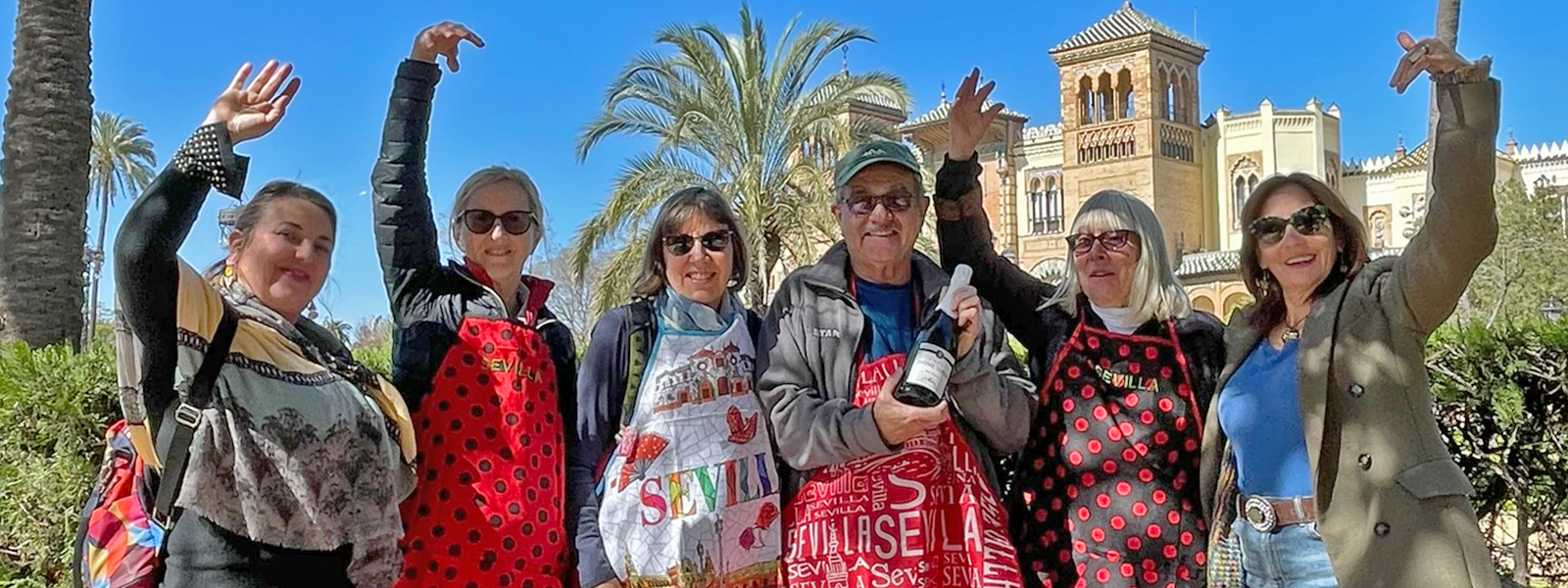
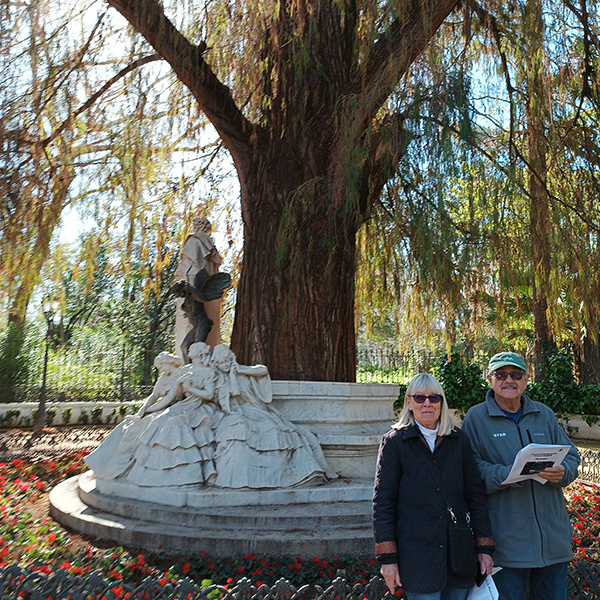
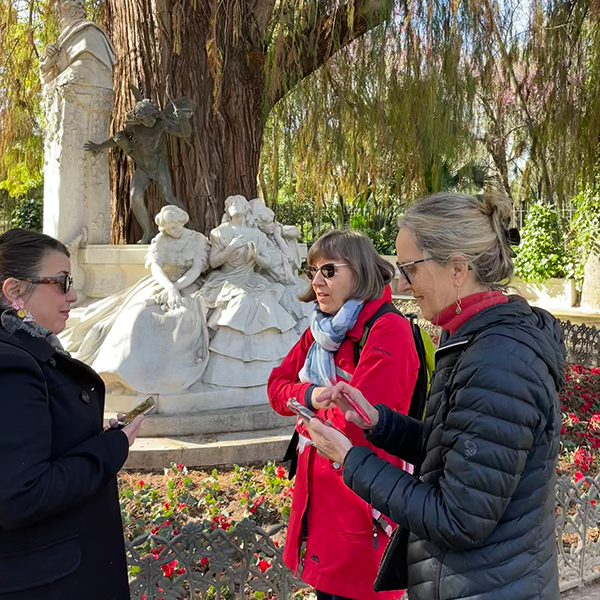
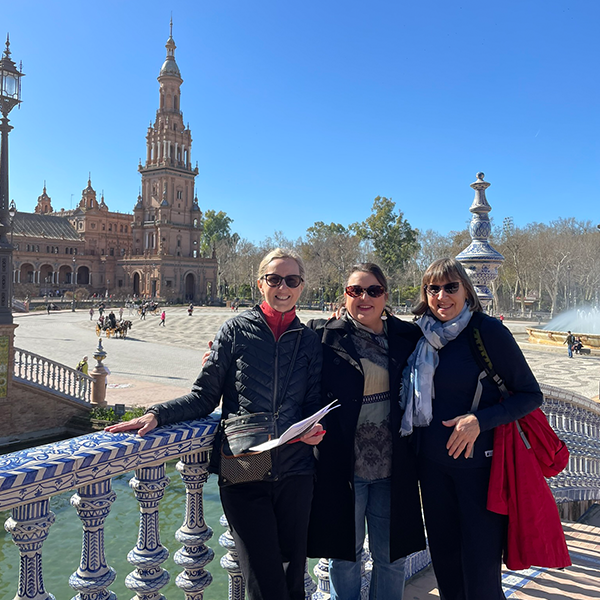
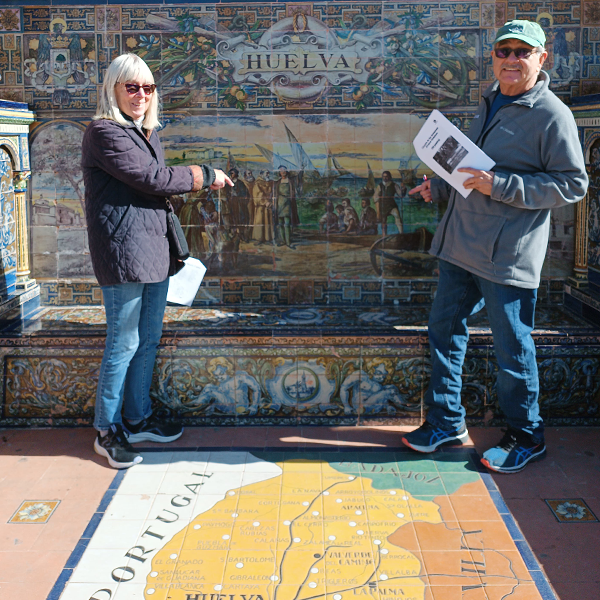
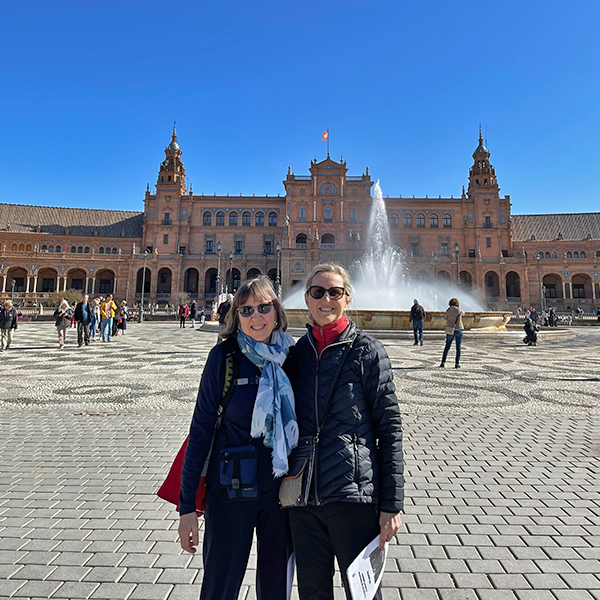
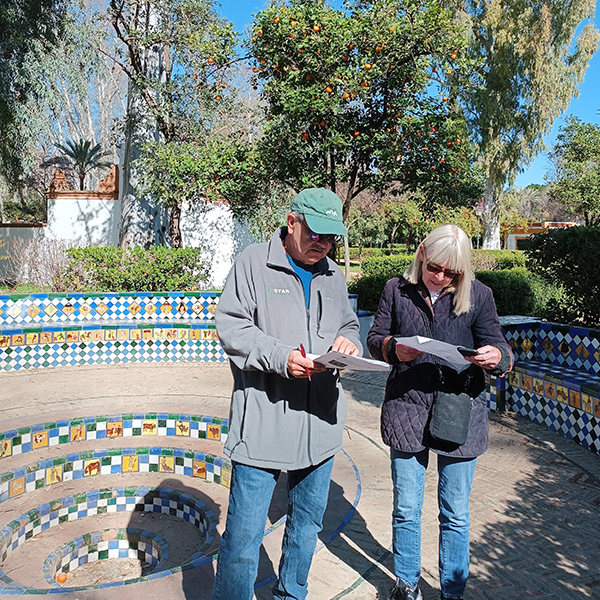
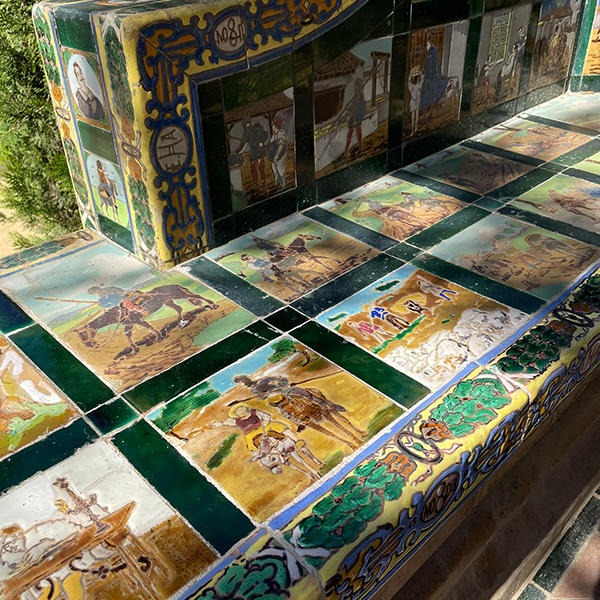
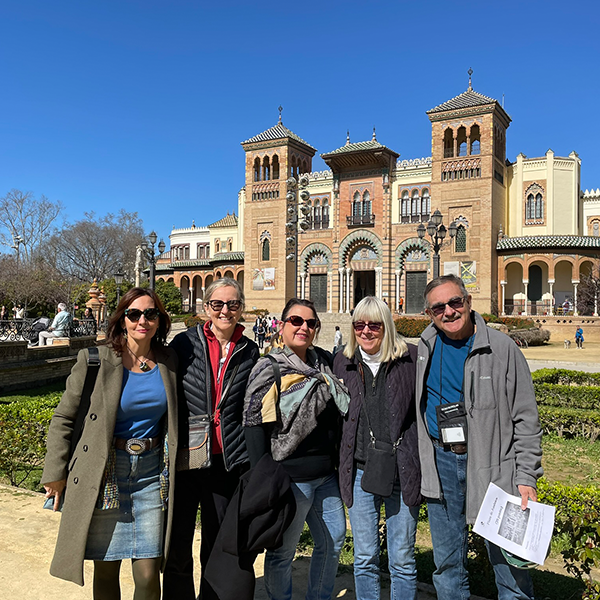
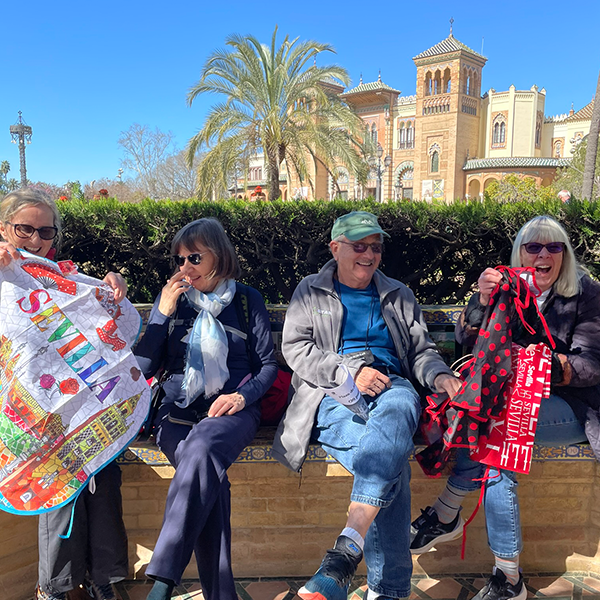
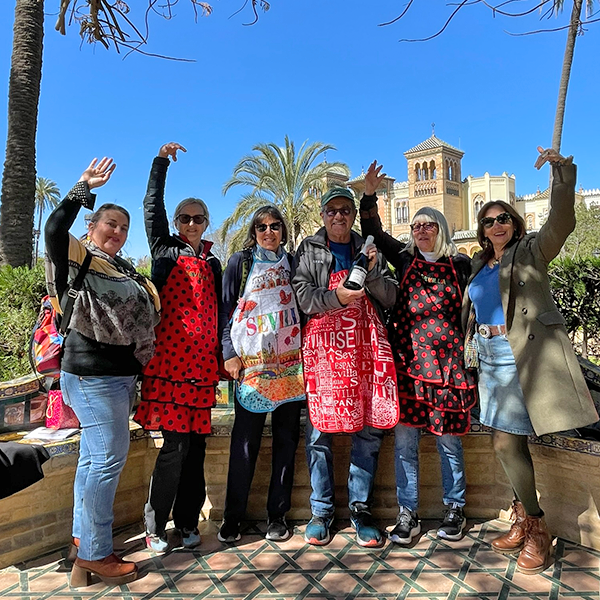
 Picture a sun-soaked day in Seville, surrounded by nature and monuments, while you participate in an exciting scavenger hunt in the most beautiful park in the city. On the Andalusia Day, celebrated every year on February 28, we took our students on a scavenger hunt that brought together two teams: the dynamic duo of Joseph and Becky, and the unstoppable force of Shelley and Cathy. The chosen place for this adventure? It was none other than the beautiful Parque María Luisa! The Starting Line The scavenger hunt kicked off at Glorieta de Goya, a charming spot right outside the park. Teams received the questions they needed to answer, and they set off to conquer the mysteries of Seville's most enchanting park. Navigating Through Art and History The adventure led the teams to Glorieta de Bécquer, named after the famous Romantic writer Gustavo Adolfo Bécquer, where our students learned more about the poet and his work. Our next stop was the iconic Plaza de España, a stunning combination of the Renaissance and Moorish architectural styles. Our students wandered around the place where many movies were filmed! Wouldn’t you feel like a movie star, too? Strolling along the park, the teams found themselves at Glorieta de los Hermanos Álvarez Quintero, famous Sevillian playwrights. The ambience of the park added a touch of drama to their adventure as the teams learned about the brothers’ plays. Next Stop: Glorieta de los Toreros and Glorieta de Cervantes Glorieta de los Toreros, a nod to Spain's famous bullfighters, brought the excitement of the bullfighting ring into our scavenger hunt. Matador moves? Check! Our students had to look very carefully at all the tiles to find the hidden Nazarenes, the protagonists of Spain’s Holy Week (Semana Santa). Then came Glorieta de Cervantes, paying tribute to Miguel de Cervantes. Amidst the lush greenery, the tiles narrated the story of Don Quixote, the famous knight of La Mancha who always had his loyal squire Sancho Panza by his side. The Final Stretch: Plaza de América The grand finale unfolded at Plaza de América, where the teams gathered to check their answers. Laughter and a shared sense of accomplishment filled the air as the participants eagerly awaited the final results. In a surprising twist, both teams emerged victorious with a tie. Who says there is only one winner? A Tie, A Toast, and Prizes With both teams emerging as champions, it was time to celebrate! Each participant received a beautiful Seville-themed apron, which represented the vibrant culture of the city, and a cava bottle to share the victory with the whole squad. Friendship, fun, and fizzy drinks – what more could you ask for? Look at their happy faces!
1 Comment
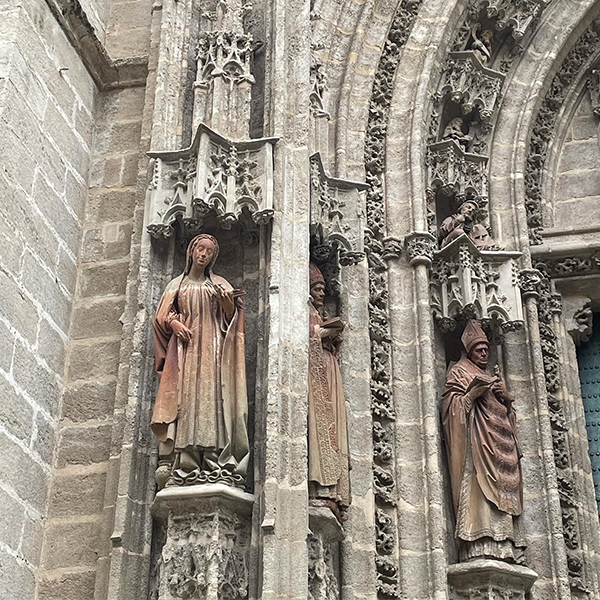
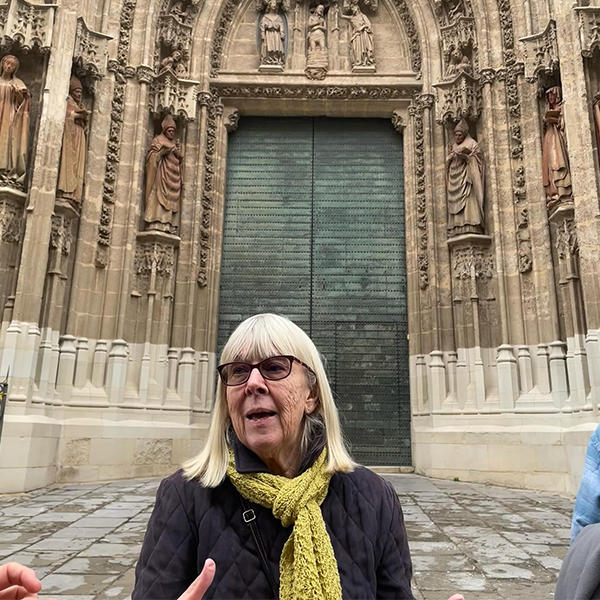
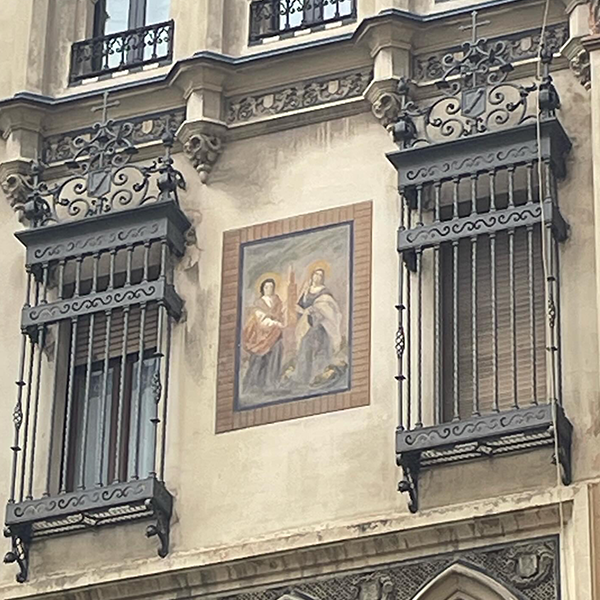
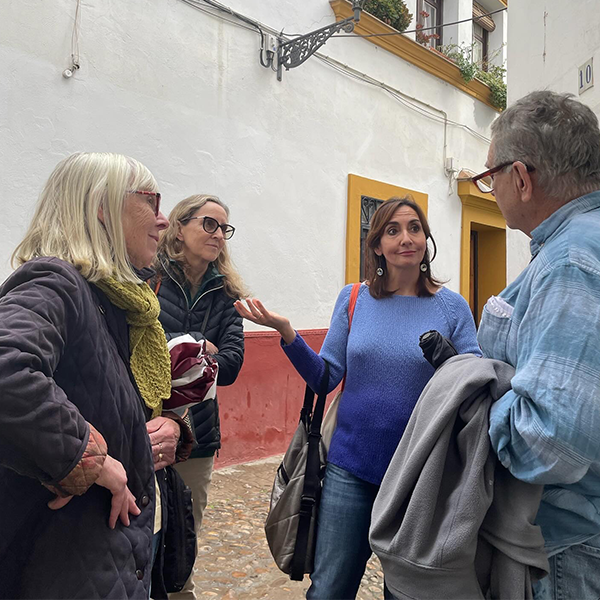
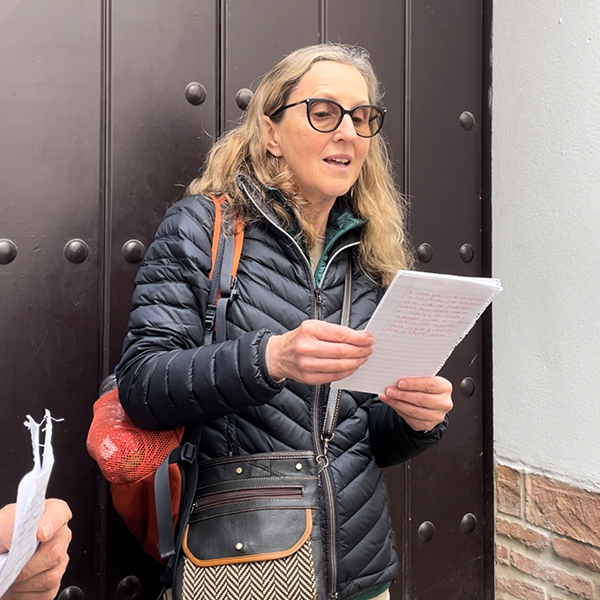
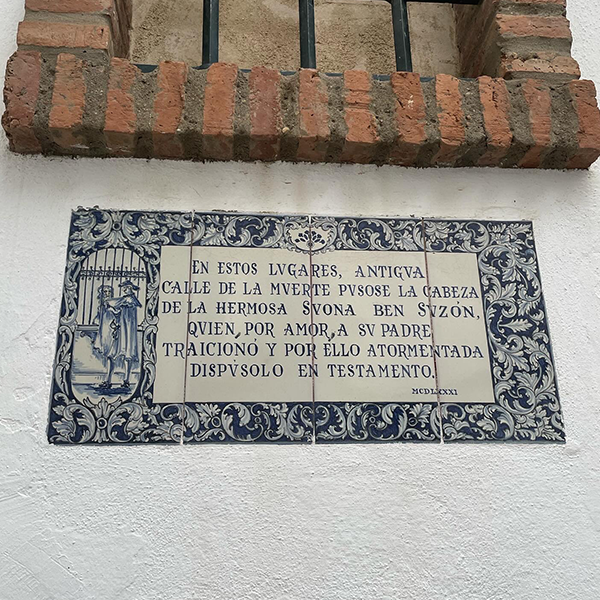
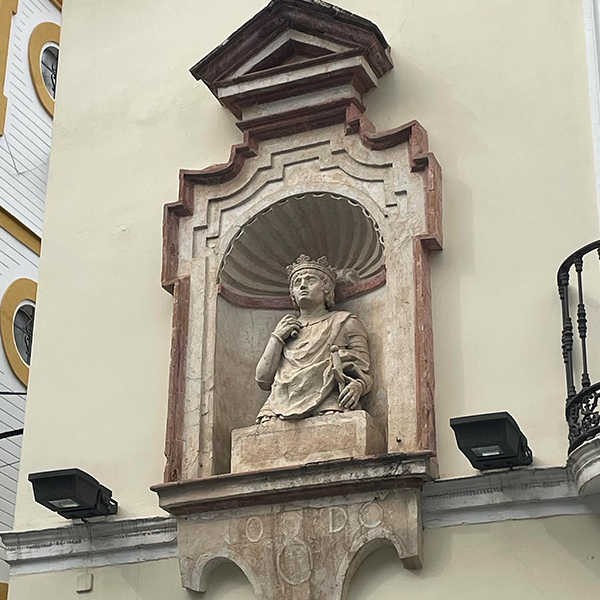
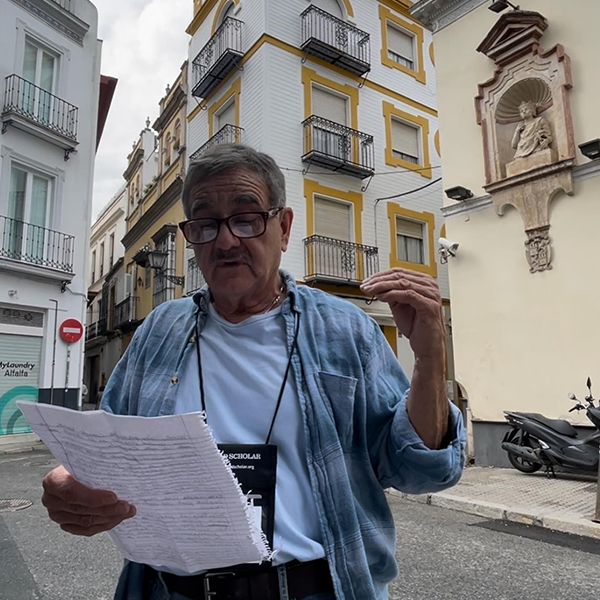
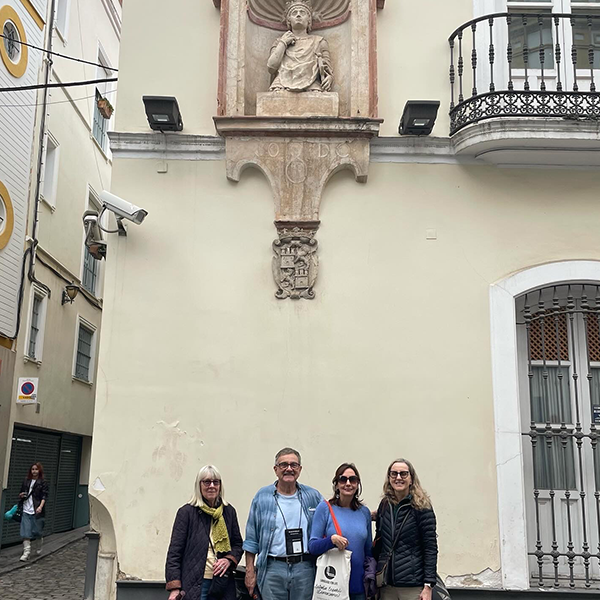
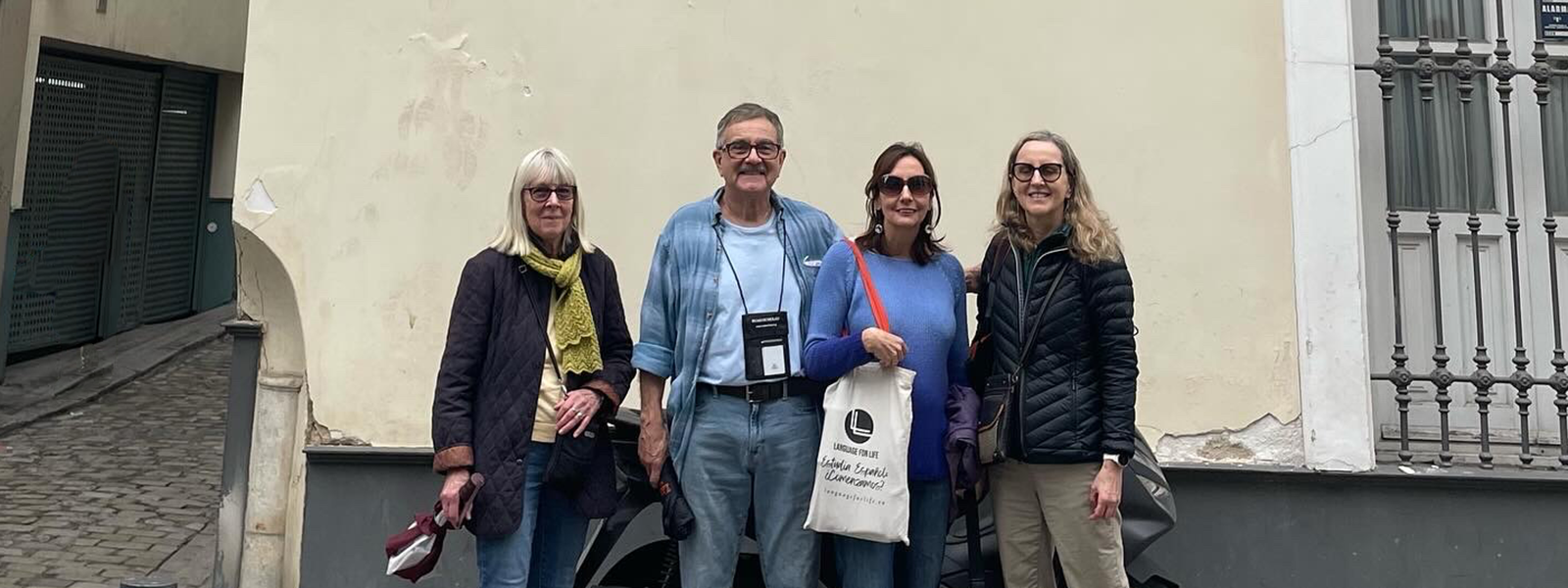 Embarking on an excursion through the streets of Seville, our students recently took the lead and each of them was tasked with presenting one of the legendary tales of Seville in Spanish. Despite the challenge, they all did an amazing job! The legend of Justa and Rufina Becky captivated us with the legend of Justa and Rufina. As the story goes, these two sisters were potters by trade, creating exquisite ceramics in the city. When they refused to sell their wares for a religious festival, their workshop was destroyed. The sisters, firm in their beliefs, defended their faith but ended being executed. It is said that the angels carried them to heaven and became the patrons of Seville. Becky's animated storytelling brought this tale to life against the backdrop of Seville's cathedral. The legend of the beautiful Susona Walking by the ancient Jewish quarter, Shelley immersed us in the romantic legend of Susona, a tale of unrequited love and treason. Susona, a beautiful young Jewish woman, fell in love with a Christian nobleman. Blinded by love, she betrayed her father by reporting his revolutionary intentions to save her lover. Heartbroken after the death of his father, she devoted herself to helping others in need and demanded her head to be hung from the door of her house after her death as a warning of the consequences of her actions. In the so-called Calle de la Muerte (Death Street), Shelley told the story calmly but with full determination. The legend of the Head of King Don Pedro Joseph concluded our excursion with the mysterious legend of the Head of King Don Pedro. In the dark corners of Seville's history, the legend tells of a king who met a tragic end, with his head separated from his body. The narrative unfolded as Joseph detailed the story in front of the niche that portrays the figure of the king. Seville, with its ancient charm and mystical ambience, proved to be the perfect setting for students to explore and share these captivating legends. The excursion helped them to improve their language skills as they presented these legends in Spanish! The echoes of Justa and Rufina, Susona, and the Head of King Don Pedro linger in the air, leaving an indelible mark on our students' memories.
If you want to see our students telling these legends, visit our Instagram account! 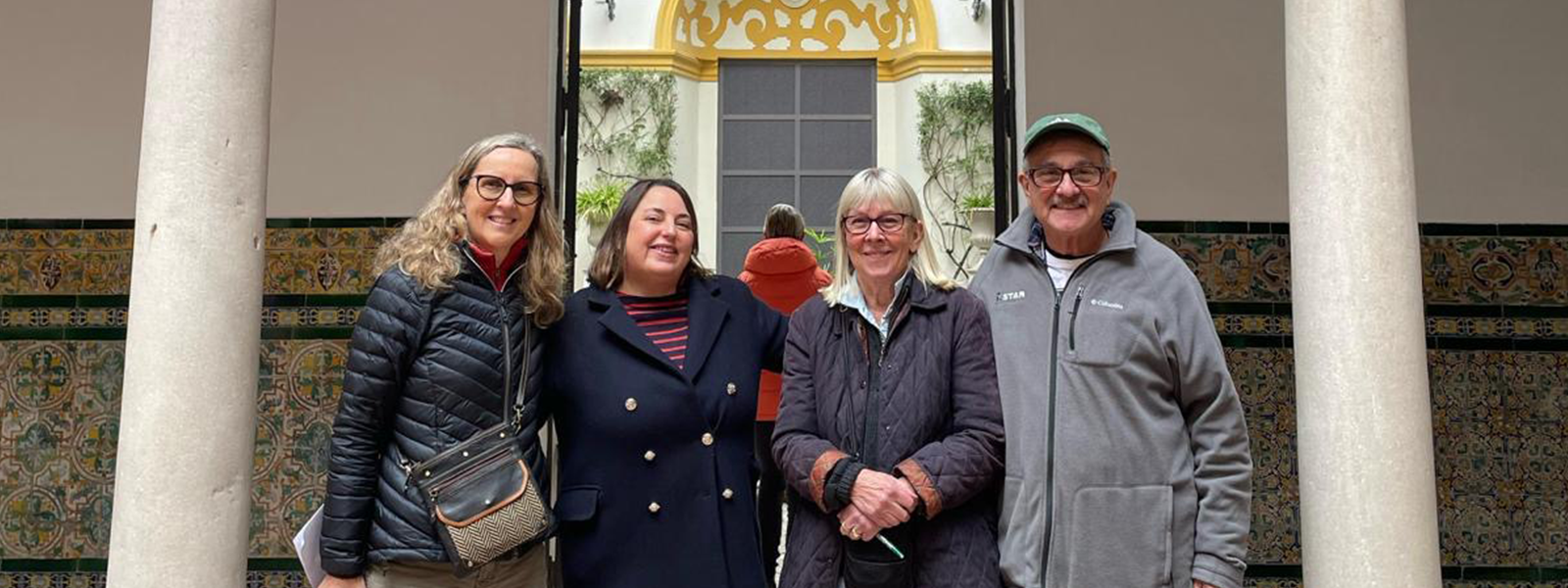 Last week, our students went on an excursion to the famous Museo de Bellas Artes in Seville. This cultural gem located in the city centre provided a unique opportunity for them to discover the history and paintings that define Sevillian art. Getting Started Originally the Convent of Merced Calzada, the museum's building itself is a testament to the city's past and has undergone various transformations before becoming the celebrated museum that it is today. On the ground floor, they visited some of the ancient cloisters like Patio del Aljibe (Cloister of the Aljibe) and Patio de las Conchas (the Old Sacristy of the Convent whose niches were decorated with shells). Our student Shelley found it fascinating! 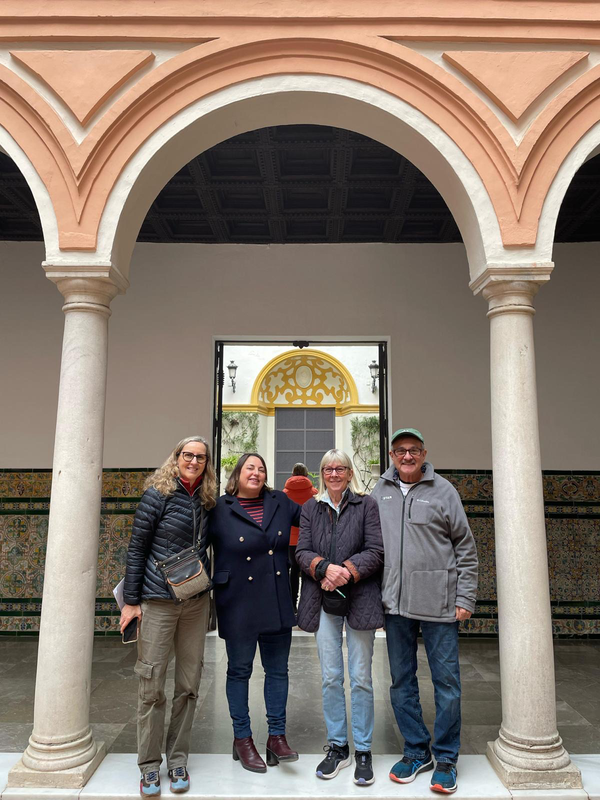 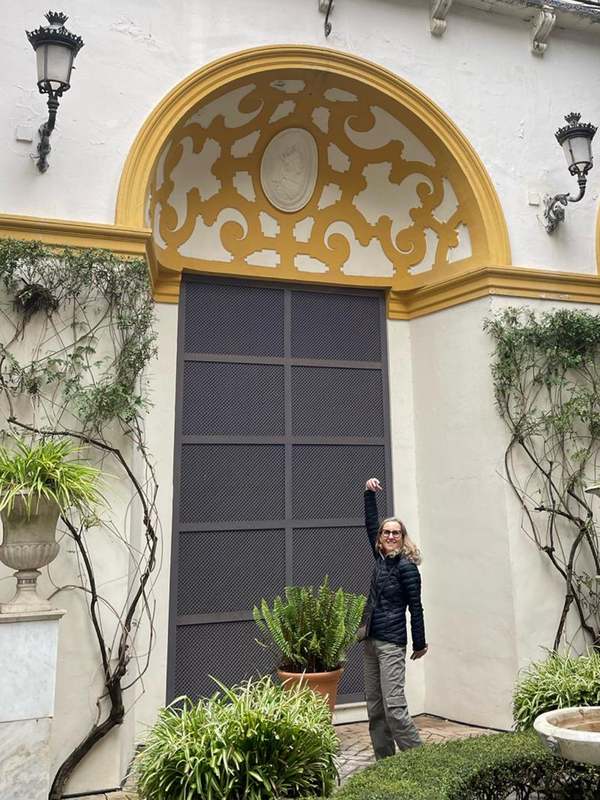 Exploring the Galleries After a brief pause in Patio del Aljibe where they learned more about the history of the museum, we visited the Claustro Mayor (Main Cloister) where our teacher Natalia explained what they had to do during the visit. We gave our students some questions related to the paintings they would find on the first floor, and we asked them to find the answers within 25 minutes! 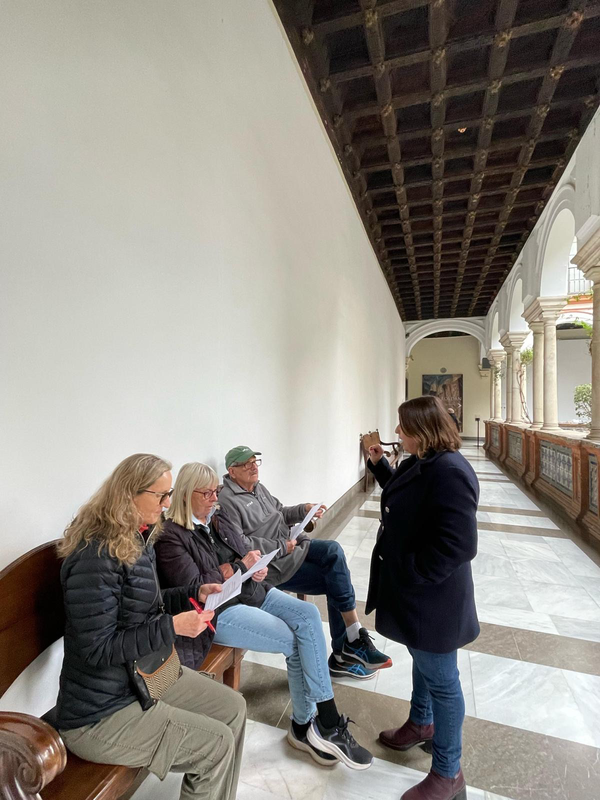 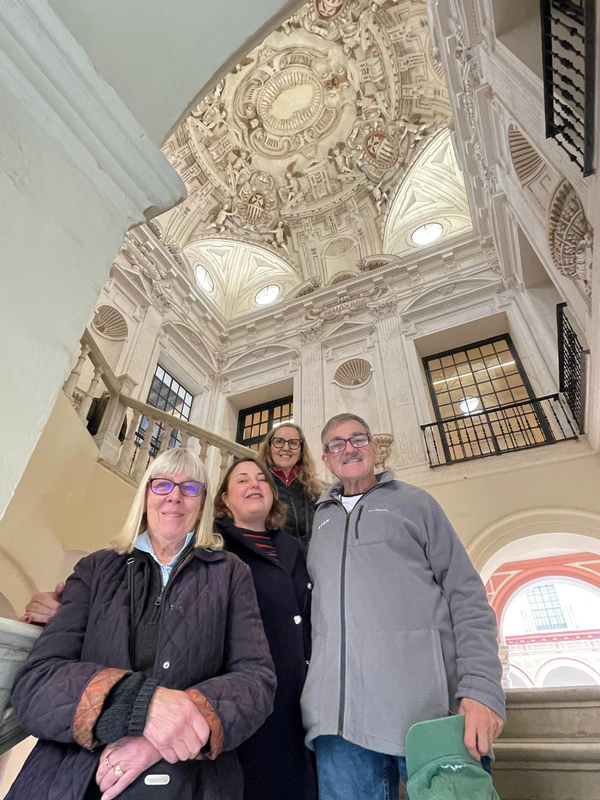 As soon as the clock started ticking, we ran up the stairs to find the solutions. At first, our students found themselves lost in a maze of paintings, but they managed to overcome the difficulties and even asked the museum personnel to help them using what they have been learning in class. While looking for the answers, Joseph, Becky and Shelley navigated through the museum's halls and galleries that housed art from different styles and periods. From the stunning works of renowned Spanish painters like Velázquez and Zurbarán to the captivating sculptures that adorned the halls, the activity took them on a journey through the history of art in Seville. 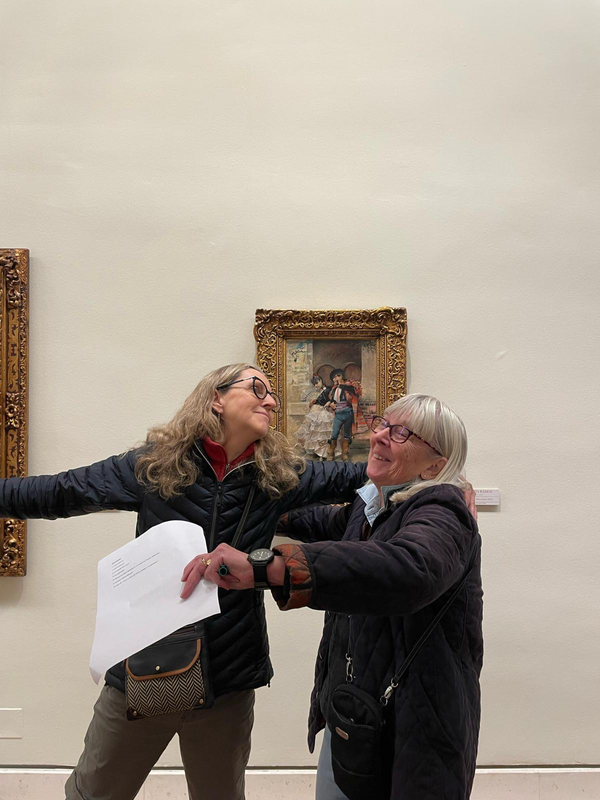 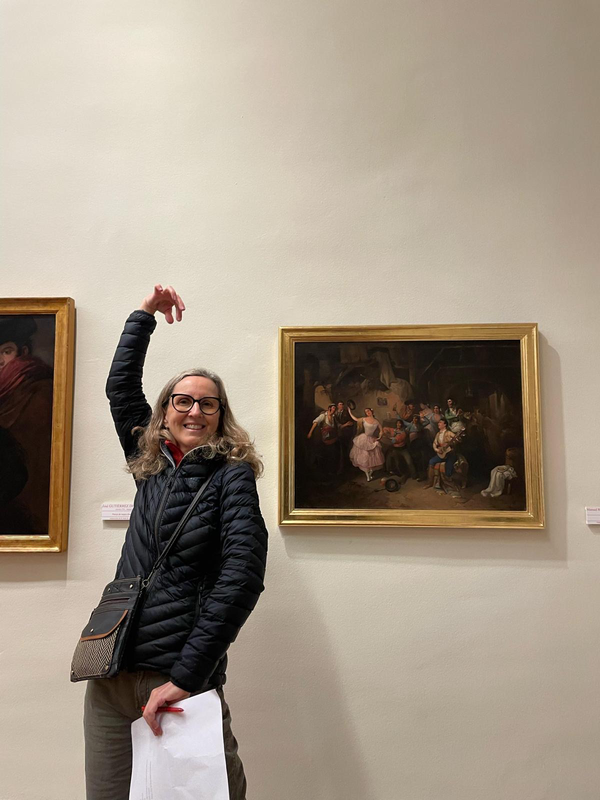 Pedro Roldán exhibition and Murillo’s paintings One of the highlights of the excursion was the opportunity to visit the temporary exhibition of Pedro Roldán, one of the most important representatives of Spanish Baroque sculpture. The visit to the exposition ended in the hall dedicated to Murillo, a famous painter from Seville, whose renowned paintings left an indelible impression on our students. Accompanied by our amazing teacher Natalia, our students gained valuable insights into Sevillian art with these interactive sessions. Beyond the art, this excursion also allowed our students to talk with fellow museum members providing a chance to put their knowledge and skills into practice. By doing this kind of cultural visits, we intend to share our culture with our students and enrich their minds and hearts. Learning Spanish in Seville: An unforgettable culture & language experience for people over 5022/5/2023 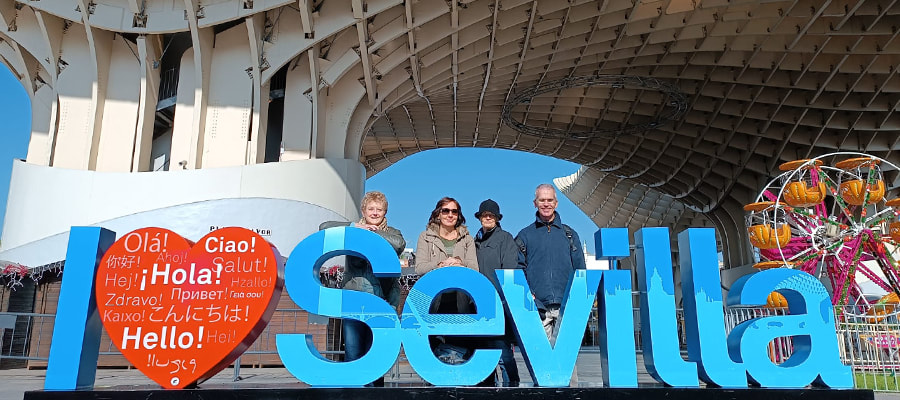
We are a small language academy located in Spain dedicated to immersing people in the culture of a city we love, Seville. Through our company Language for Life, we organize cultural programs including visits to the main monuments and museums as part of our Spanish classes. We find that seeing and doing things in the city complements the formal Spanish courses we hold in the classroom. During our programs, we conducted a series of short interviews with some participants and this is what they shared with us. 1. Some people wonder if it is too late to start learning an additional language like Spanish when you are not so young. It is never too late, according to Donna Seifert, 71 (Santa Fe, NM): No, no, no! Because in adulthood, one finally has time to attend classes, knows why she wants to speak another language and has the courage and patience to listen to another language. Yes, it might be harder to remember new words and verb conjugations than when you were 20 years old. However, for young adults, studying a language is a task. In maturity, it is a new way to communicate with others and to explore different ways of seeing the world. Yes, it is more difficult for me to remember words, uses of verbs, prepositions, and aspects of grammar of a language with roots in Latin. The truth is, I don't like exercises. And I don't like to make mistakes. However, the most important thing for me is the opportunity to communicate with those who do not speak English in Santa Fe, like the market vendors, the woman who paints the plates and tiles, the Quechua woman who makes traditional baskets—and speaks Spanish as a second language too. Yes, the fight continues. And yes, I can help and support Spanish speakers in the court of justice. Donna volunteers in an association called Esperanza in Santa Fe in New Mexico where she supports women who have suffered domestic violence. Most of them speak Spanish as a mother tongue. The best part is to be physically and mentally active, according to Rosemary, 73 (Newport, ME): The short answer is no, it is never too late to learn a language like Spanish. Learning a new language is beneficial for our health at so many levels. Being a life-long learner is a good way to avoid dementia, Alzheimer's diseases and to keep our brain and memory active. Spanish speakers contribute to the learning process, the teachers, the market and store vendors, they all make a difference. Thanks to patience and corrections, I learn new words—and most importantly I learned new aspects of life. Living and taking Spanish classes in Seville was an active processes, conversations, reading books, visiting interesting places, trying the delicious dishes at a local marketplace transformed the way I defined myself as a tourist. The best was living in a place where you can see, hear, and speak the language. 2. Tell us about your experience after visiting Spain. Being part of the culture and not a mere spectator makes all the difference, according to Anne Williams, 74 (Portland, OR): Taking Spanish Communication Classes at Language for Life Academy can be much more than being a passive tourist who visits the typical places and returns home. In fact, this year I’ll return to visit the city that gives me so much joy, the beautiful city of Seville. Learning is a way of life, according to Jennifer, 68: Thanks to my interest in the Spanish language and culture I have travelled to different countries in the world. My last trip to Seville met all the goals: explore the city on foot, exercise my memory, have good relationships, make new friends, I learned new things about myself and got to know me better. I have reached the conclusion that every time I travel, my experience improves significantly because I am able to be part of the culture and not just a mere spectator. For those of you interested in travelling solo to Seville, here are some tips:
Overall, Seville is a beautiful and vibrant city that's perfect for people over 50 who want to explore the history and culture of Spain. With its friendly locals, impressive architecture and delicious cuisine, Seville is sure to be an unforgettable trip. Learn more about signing up for a program, or email us at info@languageforlife.eu for more information. Available time slots
While the conversation class will be offered once a week, we have four time slots you can choose from. Please get in touch with us to let us know which section you would like to join and we will do our best to accommodate your request.
Please note that all times are listed in Eastern Standard Time. |
AuthorLanguage for Life is a Spanish language and culture academy based in Seville, Spain. Categories
All
Archives |
 RSS Feed
